Introduction
KensoBI is a quality intelligence platform for the manufacturing industry, built around measurement data analytics, 3D part visualization, and Statistical Process Control.
Analytics
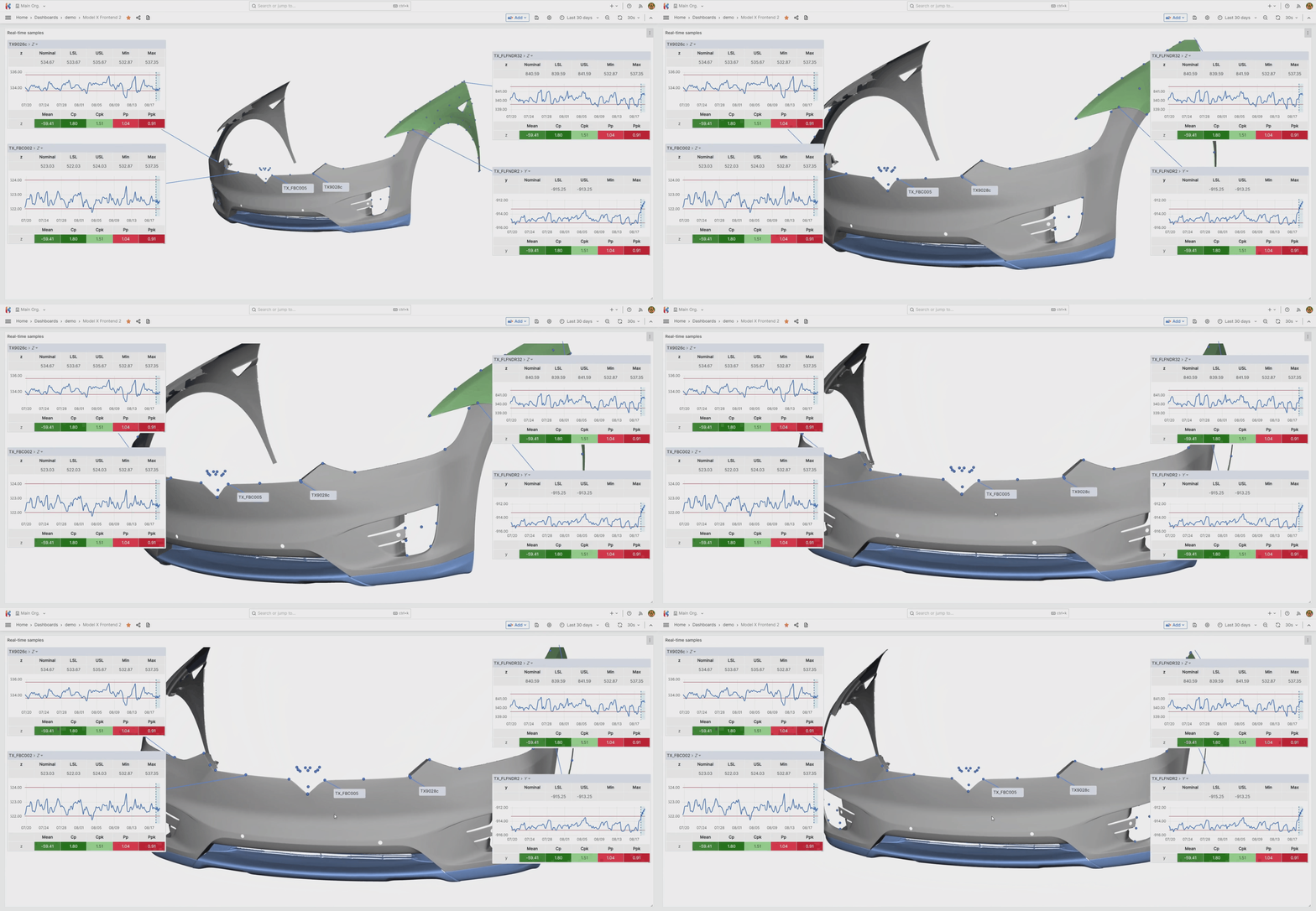
KensoBI is built on Grafana, an open-source analytics platform used by over 10 million users worldwide. KensoBI extends Grafana for manufacturing quality by adding CAD support, a full suite of SPC panels, and machine learning capabilities. Users can create digital twin dashboards with fully interactive 3D CAD objects viewable from any web browser, and the feature data source lets users explore quality data without writing SQL.
Panels
The KensoBI SPC Suite is a collection of Grafana panels designed for manufacturing quality analytics:
- SPC CAD Panel — Visualize CAD models, point clouds, and metrology data alongside live measurements
- SPC Chart — XmR, Xbar-R, and Xbar-S control charts with automatic control limit calculation
- SPC Histogram — Process data distributions with capability indices and control limits
- SPC Box Plot — Box-and-whisker plots with Xf-Rf control limits for detecting shifts in location and spread
- SPC Pareto — Pareto analysis to identify and prioritize the most significant defect contributors
- SPC Bullet — Progress bars and bullet charts with SPC capability metrics (Cp, Cpk, Pp, Ppk)
Data Sources
- SPC Characteristic Datasource — Connect your measurement database to the SPC CAD Panel for feature annotations, trend charts, and capability statistics — no SQL required
Quality Management
The Quality Manager App enables you to create and manage models, parts, features, and characteristics, as well as measurement plans. To access Quality Manager, toggle the navigation menu, scroll down to the Apps section, and select Quality Manager.
Machine Learning and Alerting
KensoBI's machine learning capabilities provide better forecasting of production quality. Statistical process control and machine learning models continuously update as new measurements come in, triggering alerts when a process shifts in the wrong direction. The system can automatically respond to errors — from sending an email notification to autonomously implementing corrective actions.